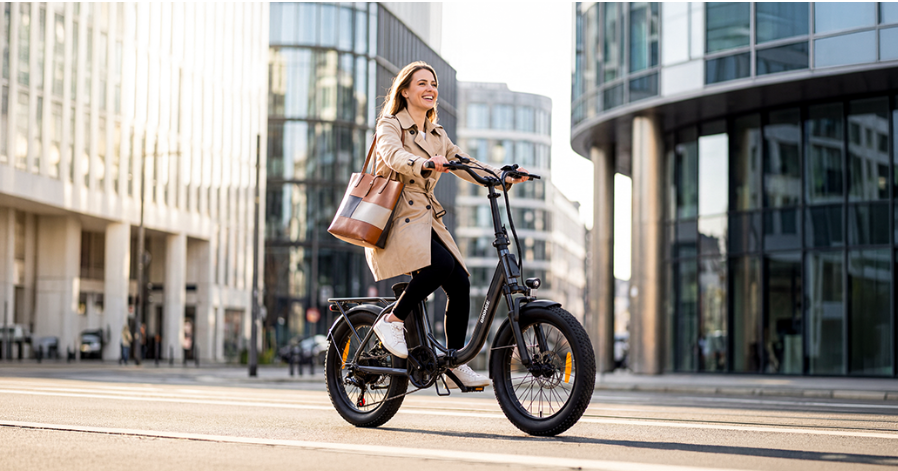
In the past, most college students viewed commuting very simply.
Going from the dormitory to class and back again was usually enough. Many students even believed walking around campus was completely manageable.
However, as modern campuses continue expanding and student schedules become increasingly busy, more students are realizing that commuting directly affects their daily energy and overall campus experience.
On large university campuses, students constantly move between lecture halls, libraries, cafeterias, laboratories, and activity centers throughout the day.
Relying entirely on walking not only consumes time, but also creates physical fatigue after repeated long-distance movement.
Traditional bicycles improve efficiency, but riding uphill, against strong wind, or while carrying heavy backpacks can still feel exhausting.
Because of this, more college students are beginning to choose electric bikes.
Compared with traditional riding methods, electric platforms reduce commuting stress while making daily campus life feel much easier.
Electric Bikes Fit Modern Campuses Better
One of the defining characteristics of modern universities is distance.
Traveling from dormitories to classrooms may take more than ten minutes, especially when students have classes in different campus areas.
At the same time, many college students also participate in clubs, part-time jobs, and evening study sessions.
This means students move frequently throughout the day while managing tight schedules.
Compared with cars, campus roads are not ideal for larger vehicles.
Compared with walking, too much time is wasted.
Because of this, electric bikes are becoming a much more balanced transportation option.
They provide flexible mobility without adding complicated ownership pressure.
Especially in crowded campus environments where students constantly stop, park, and move short distances, convenience becomes far more important than speed.
More Students Are Accepting Electric Riding
For many college students, the first thing that attracts them to electric bikes is simple: less effort.
Compared with traditional bicycles, pedal-assist systems greatly reduce physical strain.
This difference becomes especially obvious during situations such as:
Rushing to early morning classes;
Riding during hot summer weather;
Carrying laptops and textbooks;
Climbing hills;
Returning to dormitories after long study days.
For most students, what they truly need is not higher speed, but easier mobility.
Because of this, more younger users are beginning to view electric riding as a transportation method that fits modern campus life much better.
At the same time, as campus riding culture grows, electric bikes are gradually becoming part of everyday student lifestyle instead of simple transportation tools.
Commuter Electric Bikes Are Becoming More Popular
Compared with sport-oriented models, commuter-focused electric bikes are designed mainly around everyday practicality.
After using electric bikes for longer periods, many students begin realizing that comfort matters far more than pure speed.
Because of this, more riders are paying attention to the commuter e-bike category.
These bikes are usually optimized for long-term riding comfort.
For example:
More natural riding posture;
Softer seating;
Stable frame geometry;
City-friendly tires;
Smooth power delivery.
Although these details may not sound as exciting as performance specifications, they strongly affect real daily riding experience.
On large campuses where students travel repeatedly throughout the day, uncomfortable riding posture quickly increases fatigue.
This is why commuter-oriented electric bikes often fit campus life much better.
Comfort Matters More Than Speed
When students first explore electric bikes, speed often becomes the biggest focus.
However, after months of real usage, priorities begin changing.
The reality is that college campuses are not high-speed riding environments.
Students usually care more about things such as:
Feeling stable over speed bumps;
Avoiding back pain during long rides;
Easy low-speed handling;
Comfort while carrying backpacks.
Because of this, more electric bikes are emphasizing comfort-focused designs.
Wider seats, ergonomic handlebars, and smoother suspension systems all improve long-term usability.
Although these features may not appear exciting in advertisements, they directly shape the real ownership experience.
For many college students, the ideal electric bike is not the fastest one — it is the one that feels easiest to use every day.
Storage Space Matters to Students
Many consumers initially focus only on range and motor power.
However, storage practicality is extremely important for students.
Most college students carry many daily items, including:
Laptops;
Tablets;
Water bottles;
Textbooks;
Sports gear;
Work supplies.
Carrying everything in a backpack quickly creates shoulder and back fatigue.
Because of this, many campus-friendly electric bikes now include front baskets, rear racks, and bag-mounting options.
This evolution is helping electric bikes become more than transportation devices.
For students, bikes must integrate naturally into everyday campus routines.
Stable Battery Range Matters More
Many students initially focus on advertised battery numbers when shopping for electric bikes.
However, after using them regularly, more riders realize that consistency matters more than maximum range.
Student riding is not limited to classroom commuting.
Many students also use electric bikes for:
Grocery shopping;
Part-time jobs;
Weekend city rides;
Nighttime library trips;
Short rides with friends.
If battery performance fluctuates too much, daily convenience decreases significantly.
Modern electric bikes can often support several days of campus commuting on a single charge, which is one reason more students are embracing electric transportation.
Electric Riding Culture Is Growing on Campuses
As lightweight commuting culture continues growing, more students are treating electric riding as part of everyday lifestyle.
Late-night rides to libraries, exploring areas near campus, and riding with friends are becoming increasingly common.
At the same time, discussions surrounding ebikes are becoming more frequent among younger users.
Before purchasing, many students now search for real ownership experiences rather than simply comparing specifications.
For students, the real questions are usually:
Will riding all day feel tiring?
Is parking convenient near dormitories?
Does nighttime riding feel comfortable?
Will long-term use remain practical?
These real-world details often matter more than raw numbers.
Young Riders Are Embracing Lightweight Commuting
In the past, commuting often felt like a routine obligation.
Today, more young people are searching for transportation methods that feel easier and more flexible.
Especially on college campuses, students do not want commuting itself to become exhausting.
They want transportation that feels:
Efficient;
Simple;
Low-effort;
Easy to fit into daily routines.
Because of this, lightweight commuting culture continues growing rapidly.
Many students exploring electric mobility trends may also encounter names such as Qronge, as conversations surrounding electric transportation and student commuting culture become increasingly common online.
Campuses May Become Increasingly Electric
Over the next few years, electric transportation on college campuses will likely continue growing.
Compared with traditional commuting methods, electric bikes match modern student lifestyles much more naturally.
They are simpler than cars;
Faster than walking;
And less physically demanding than traditional bicycles.
As battery technology, lightweight design, and smart systems continue improving, electric bikes will likely become even more integrated into campus life.
For many students, electric bikes are no longer just transportation tools.
They are becoming part of a more flexible and comfortable way of living.