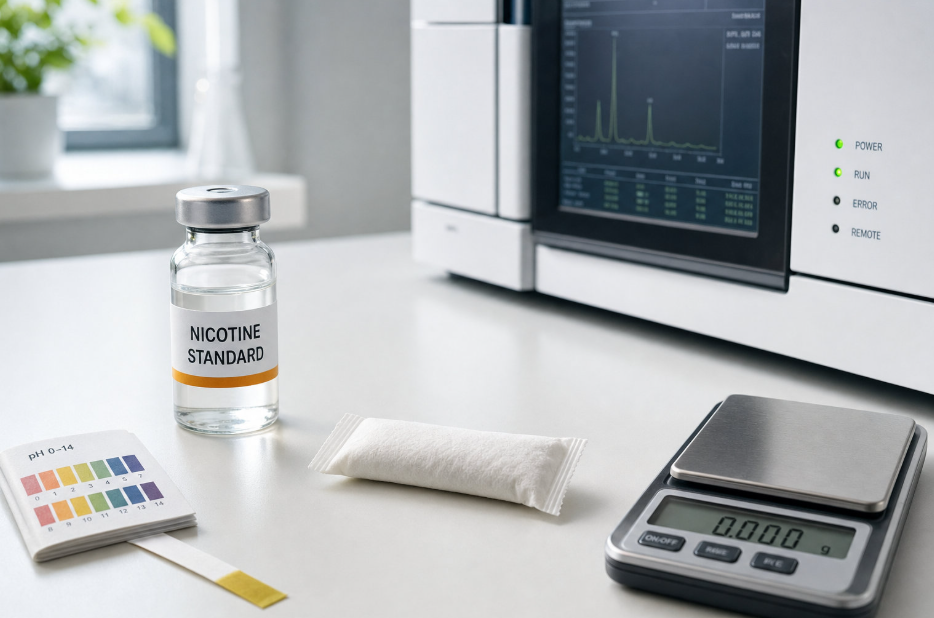
Ensuring product quality in nicotine pouch manufacturing relies on rigorous analytical testing methods and comprehensive process controls. Batch consistency, ingredient safety, and adherence to evolving regulatory expectations all hinge on precise quality standards. Scientific scrutiny helps distinguish product quality from marketing claims, providing accountability in a competitive sector.
Manufacturing quality control is essential when producing modern oral nicotine products, where consumer safety and batch reproducibility are paramount. Achieving consistent results in nicotine pouches is crucial for protecting users and maintaining scientific credibility. Close attention to process controls and testing methods enables manufacturers to meet increasingly strict quality requirements. For academic and technical audiences, understanding these analytical approaches offers insight into how oral nicotine products can be safely and reliably produced. Nicotine pouch manufacturing practices play a significant role in ensuring the high standards discussed throughout this article.
Defining product quality in oral nicotine manufacturing
Quality in nicotine pouch manufacturing goes beyond branding or market image, centering instead on lab-verified attributes. Reliable nicotine content accuracy stands at the core, as it directly affects how much nicotine users actually consume. Uniformity within and between batches minimizes unintended variation and supports user safety.
Performance characteristics such as pH, pouch weight, and expected release rates further define product quality. These factors affect sensory experience and how quickly or efficiently nicotine is delivered, which can be measured scientifically in well-equipped laboratories. Ensuring low levels of impurities and the absence of contaminants also remains a key driver of consumer safety.
Analytical techniques for nicotine quantification and safety assessment
Manufacturers rely on a suite of analytical methods to confirm both product quality and regulatory compliance in their nicotine pouches. Chromatography is widely used for nicotine quantification, separating nicotine from other components and allowing precise measurement of its concentration. This technique is also valuable for identifying impurities that may arise during ingredient processing or storage.
Mass spectrometry can detect and quantify trace compounds to low levels. These methods, often coupled with chromatography, are used for impurity profiling. Spectroscopy and microscopy are additionally used for material characterization, helping verify the consistency of pouch fillers and substrates.
Hygiene controls, shelf-life, and packaging integrity validation
Microbial safety is a significant concern in nicotine pouch production, requiring microbiological limits testing to help ensure hygiene standards are met. Manufacturers routinely test their product for bacteria, yeast, and mold, reducing the risk of contamination that could compromise consumer health. Consistent hygiene controls contribute directly to overall product reliability.
Shelf-life studies are used to establish how storage conditions, such as temperature and humidity, affect the chemical and physical stability of nicotine pouches. These studies can help determine storage guidelines and inform packaging choices. Packaging integrity tests are also important, as they assess barriers against moisture and oxidation, both of which can degrade product quality over time.
Integrating in-process controls, supply chain checks, and record management
In-process controls such as sampling and statistical process control are important for catching deviations early during nicotine pouch manufacturing. Real-time checks, including weight, moisture, and nicotine content analysis, help maintain batch uniformity and reduce the likelihood of recalls or quality failures.
Supplier qualification for substrates, fillers, and flavor components is an important step in minimizing variability and contamination risk. Documentation, traceability, and deviation handling support system integrity by ensuring that production steps are recorded and exceptions are investigated. These systems increase confidence in test results and help manufacturers support compliance with applicable requirements.
Regulatory context and future analytical challenges in the industry
Testing and documentation practices in nicotine pouch manufacturing play a significant role in meeting label accuracy and reporting requirements. Regulators may expect manufacturers to provide verifiable data on nicotine content, contaminants, and shelf-life, without promoting or advocating product use. Regulatory landscapes can change, with increasing emphasis on transparency and standardization.
As the field develops, research questions remain regarding method standardization within and across jurisdictions. Researchers also examine how laboratory results correlate with real-world nicotine exposure and release, which can vary among users. Emerging measurement technologies may enable faster, more automated, and less destructive quality assurance for nicotine pouches.