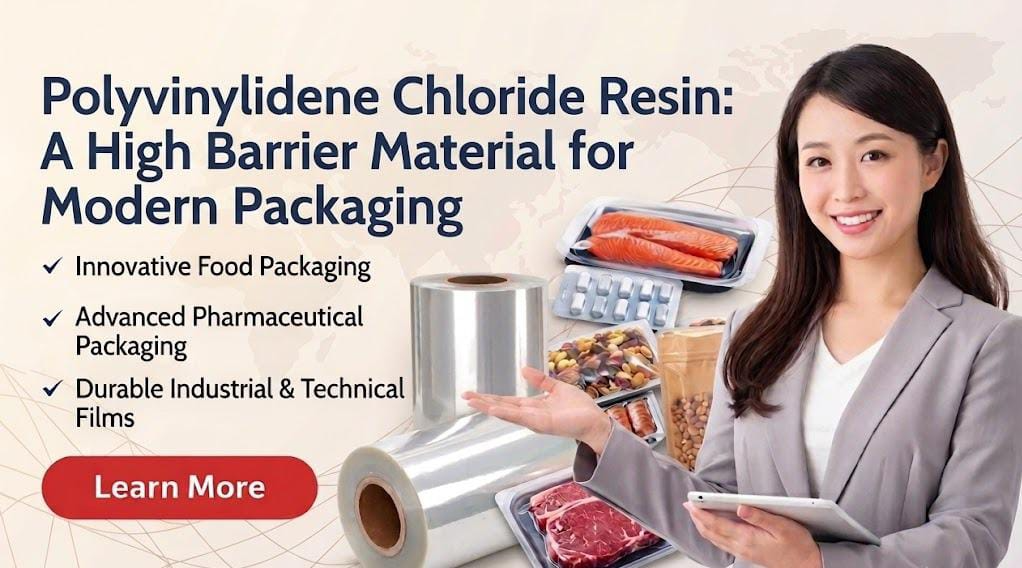
Packaging is very important because it protects products keeps them fresh and helps them last longer as industries look for better packaging materials polyvinylidene chloride PVDC has become one of the most trusted high barrier materials it is commonly used in food packaging cling films and medicine packaging because it helps protect products from oxygen moisture and outside contaminants.
A common form of this material is Polyvinylidene Chloride Resin which is known for its strong coating performance and long lasting use in flexible packaging.
PVDC resin is often used as a coating on flexible packaging materials to help protect products while keeping the packaging looking good and its strong barrier properties make it a popular choice for food medicine and industrial packing.
What Is Polyvinylidene Chloride Resin?
PVDC, scientifically known as Polyvinylidene Chloride resin, is a non-toxic, odorless, safe and reliable high barrier material. In addition to the general properties of plastics, it also has oil resistance, corrosion resistance, taste retention, excellent moisture resistance, mildew resistance, can be directly in contact with food.
| ITEM | Index |
| Appearance | White powder |
| Relative viscosity (1% THF solution, 25°C) | 1.48-1.56 |
| Apparent density (g/ml) | 0.74-0.86 |
| Volatiles (water included) (wt%) | ≤0.1 |
| Residual Vinyl Chloride (ug/g) | ≤1 |
| Residual Vinylidene Chloride (ug/g) | ≤5 |
| Impurities (pcs) | ≤10 |
| Water Vapor Transmission Rate g/(m2.24h) | ≤12 |
| Oxygen Permeability cm³/(m2.24h 0.1Mpa) | ≤85 |
| Heavy metal (Pb) (mg/kg 4% acetic acid, 95 °C, 30min) | ≤1 |
Unlike ordinary plastics PVDC forms a dense protective layer that greatly reduces the passage of oxygen or water vapor and gases and this helps packed products stay fresh for longer periods and protects them from environmental damage during storage and transportation.
Because of these qualities PVDC resin has become one of the most reliable materials for high performance barrier packing.
What Is Polyvinylidene Chloride Emulsion?
PVDC emulsion is made by polymerization of vinylidene chloride and acrylic esters, and can be directly coated on the surface of the substrate. Because its medium is water, it is easy to use, safe and reliable. It is widely used in BOPP, BOPET, PVC sheets, disposable environmentally friendly tableware, paper packaging inner layer and other packaging in the tobacco, food and pharmaceutical industries.
| Property | QL-702Y | QL-702L | QL-702T |
| Solid Content % | 59±1 | 40±1 | 55±1 |
| Surface Tension, (25℃) mN/m | ≤48 | ≤48 | ≤48 |
| Viscosity, (25℃) mPa·s | 15-45 | 3-30 | 8-30 |
| pH | 2.5-4.0 | 1.0-3.5 | 1.5-3.0 |
| Residual Vinyl Chloride, μg/g | ≤2.0 | ≤2.0 | ≤2.0 |
| Residual Vinylidene Chloride, μg/g | ≤10.0 | ≤20.0 | ≤10.0 |
Why Barrier Protection Matters
Every packaged product is exposed to outside conditions that can affect its quality and oxygen can make products spoil and moisture can change their texture and outside odors can change their original taste.
High barrier coatings help prevent these problems by creating a protective shield around the product and this allows manufacturers to maintain quality and reduce spoilage and improve customer satisfaction.
For food producers and better barrier protection often means a longer shelf life and less product waste throughout the supply chain.
Key Features of PVDC Resin
One of the reasons PVDC remains popular is its excellent combination of performance and versatility.
Excellent Oxygen Barrier
PVDC provides strong protection against oxygen which makes it a great choice for packaging foods that spoil easily such as meat, cheese or coffee and processed foods.
Outstanding Moisture Resistance
The material also blocks water vapor which helps keep packaged products fresh and protects their texture and overall quality.
Chemical Resistance
PVDC resists oils, fats or acids and many chemicals which helps it work well in food and industrial packaging.
High Transparency
PVDC coatings stay clear and transparent so people can see the product while it stays well protected.
Good Flexibility
Despite its strong barrier properties PVDC coated films remain flexible enough for wrapping and sealing and transportation.
Common Applications
PVDC resin is used across many industries because of its reliable barrier performance.
Food Packaging
Food packaging is the largest application for PVDC resin. It is commonly used in:
- Cling films
- Flexible food packaging
- Meat packaging
- Cheese packaging
- Frozen food packaging
- Snack packaging
- Bakery packaging
These applications benefit from improved freshness and longer shelf life.
Pharmaceutical Packaging
Many medicines need protection from moisture and oxygen PVDC coated blister packs help keep medicines stable and safe and effective.
Industrial Packaging
Industrial manufacturers also use PVDC coatings to protect products from moisture and other outside conditions during storage and shipping.
Benefits Over Conventional Packaging Materials
Compared with many traditional packaging materials PVDC resin offers several important advantages.
These include:
- Superior oxygen barrier
- Excellent moisture resistance
- Longer product shelf life
- Strong chemical stability
- High transparency
- Reliable heat-sealing performance
- Good compatibility with multilayer packaging systems
These features help manufacturers make high quality packaging that works well even in tough conditions.
Supporting Sustainable Packaging
Reducing food waste is an important goal in the packaging industry because PVDC helps keep products fresh for longer and helps reduce spoilage throughout the supply chain.
Products that stay fresh for longer benefit manufacturers and retailers and consumers while helping use resources more efficiently and many companies are also developing better coating technologies to improve packaging performance and support more sustainable manufacturing.
Choosing the Right Polyvinylidene Chloride PVDC Resin
Selecting the appropriate PVDC resin depends on several factors, including:
- Product type
- Barrier requirements
- Packaging material
- Manufacturing process
- Regulatory compliance
- Desired shelf life
Working with an experienced supplier helps ensure the resin matches both production needs and packaging performance requirements.
Future Outlook
As demand for high quality packaging continues to grow PVDC resin is expected to remain an important material across food or pharmaceutical and industrial markets.
New improvements in flexible packaging and coating technologies continue to make it work better helping manufacturers meet changing customer needs while keeping products well protected.
Conclusion
Polyvinylidene Chloride Resin is one of the best materials for high barrier packaging because it provides strong protection against oxygen moisture and chemicals which helps keep products fresh and extends their shelf life.
Whether it is used in food packaging medicine blister packs or industrial coatings PVDC resin continues to provide reliable protection and long lasting value as packaging technology improves this versatile material will remain a trusted choice for manufacturers who need strong and dependable barrier protection.